Why OpenAI's Chat Commerce play was always investor bait.
Chat commerce was always a cludge, even before OpenAI used it as a fundraising narrative last year.
The history of chat commerce
It became big when Facebook and friends launched live streaming which created a massive live commerce segment - in some Asian countries approaching transaction volume amounting to single digit of GDP.
Night market stalls now streamed their product When live commerce appeared, platforms had no commerce tooling at all, so messaging the creator was the only way of getting a transaction done.
It was “unstructured” Clever and hungry Growth VP types - at constant war with other VPs of other surfaces for headcount, the metric gating promotion to higher VP ranks - instantly realized this was a career defining opportunity - using the old “the data shows the demand” they got approval to kick off international efforts to “capture” this transaction volume.
But if you worked in Big Tech at any point, you understand products that fall between VPs - like Messaging vs Commerce vs Payments vs Live/Feed are hell precisely because of politics, VP competition, bell curve ratings and priorities. You avoid them like hell because if your number one priority is someone else’s number 3, them de-prioritizing your product kills your chance to deliver and with it puts you at risk of not meeting goals, which, for some jobs like engineers, can wash you out of the company.
For example, adding a buy button to Live Streaming would be a superior solution, but the result could be loss of feed time (people who buy stop shopping), so you’d hurt your own “time in feed” goals team while helping the chat team get to meet their messages sent metric and the payment team, capturing the Total Payment Volume (TPV) with their goals.
That means they’ll get headcount and promotions and GPU, likely from your budget. This gets worse when the top level areas are “between” top level VPs - like Payments and Messaging.
Anyway, chat commerce kind of died for Big Tech as an area of interest because of execution and instead was captured by TikTok and smaller apps.
Nevermind this though, the one lesson it should have taught the VPs, some of whom are now in charge of OpenAI commerce efforts, that shopping was the result of entertainment, an activity (watching live streams to hunt for deals, social interactions with sellers, etc).
You don't beat hyper-optimized systems with new technology
App based shopping is a maximally optimized experience, especially for companies like Walmart or Shein. A decade plus of solid genetic engineering, one a/b test at a time.
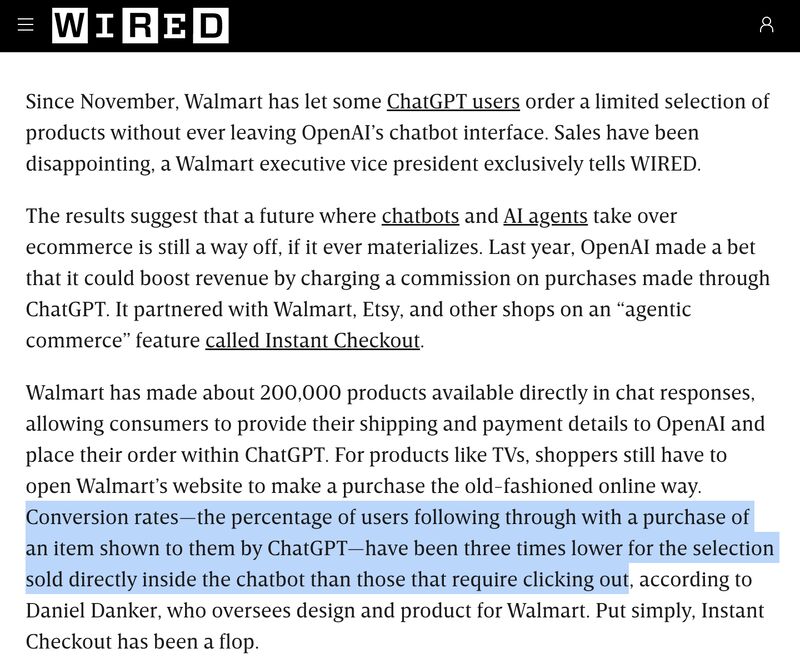
This means the notion that somehow you could massively move the bar on core metrics by dropping in an LLM and entirely new paradigm was completely preposterous from the start and OpenAI’s defeat in both of its initiatives was totally predictable for anyone involved except hapless investors.
It must have, at time of proposal, been apparent to OpenAI leadership, but I'm sure they enjoyed the free investor narrative and the opportunity to collect some premium observability data on Walmart's Checkout operation.
Note: The author lead partnerships Engineering for Commerce and Payments and, at times Live Video, in APAC for a certain big tech.
Chat commerce was always a cludge. It became big when Facebook and friends launched live streaming which created a massive live commerce segment - in some Asian countries approaching transaction… | Georg Zoeller
Chat commerce was always a cludge, even before OpenAI used it as a fundraising narrative last year. ### The history of chat commerce It became big when Facebook and friends launched live streaming which created a massive live commerce segment - in some Asian countries approaching transaction volume amounting to single digit of GDP. Night market stalls now streamed their product When live commerce appeared, platforms had no commerce tooling at all, so messaging the creator was the only way of getting a transaction done. It was “unstructured” Clever and hungry Growth VP types - at constant war with other VPs of other surfaces for headcount, the metric gating promotion to higher VP ranks - instantly realized this was a career defining opportunity - using the old “the data shows the demand” they got approval to kick off international efforts to “capture” this transaction volume. But if you worked in Big Tech at any point, you understand products that fall between VPs - like Messaging vs Commerce vs Payments vs Live/Feed are hell precisely because of politics, VP competition, bell curve ratings and priorities. You avoid them like hell because if your number one priority is someone else’s number 3, them de-prioritizing your product kills your chance to deliver and with it puts you at risk of not meeting goals, which, for some jobs like engineers, can wash you out of the company. For example, adding a buy button to Live Streaming would be a superior solution, but the result could be loss of feed time (people who buy stop shopping), so you’d hurt your own “time in feed” goals team while helping the chat team get to meet their messages sent metric and the payment team, capturing the Total Payment Volume (TPV) with their goals. That means they’ll get headcount and promotions and GPU, likely from your budget. This gets worse when the top level areas are “between” top level VPs - like Payments and Messaging. Anyway, chat commerce kind of died for Big Tech as an area of interest because of execution and instead was captured by TikTok and smaller apps. Nevermind this though, the one lesson it should have taught the VPs, some of whom are now in charge of OpenAI commerce efforts, that shopping was the result of entertainment, an activity (watching live streams to hunt for deals, social interactions with sellers, etc). ### You don't beat hyper-optimized systems with new technology App based shopping is a maximally optimized experience, especially for companies like Walmart or Shein. A decade plus of solid genetic engineering, one a/b test at a time. This means the notion that somehow you could massively move the bar on core metrics by dropping in an LLM and entirely new paradigm was completely preposterous from the start and OpenAI’s defeat in both of its initiatives was totally predictable for anyone involved except hapless investors. It must have, at time of proposal, been apparent to OpenAI leadership, but I'm sure they enjoyed the free investor narrative and the opportunity to collect some premium observability data on Walmart's Checkout operation. Note: The author lead partnerships Engineering for Commerce and Payments and, at times Live Video, in APAC for a certain big tech.
 linkedin.com